EMPEROR SCORPIONS CONTINUED...
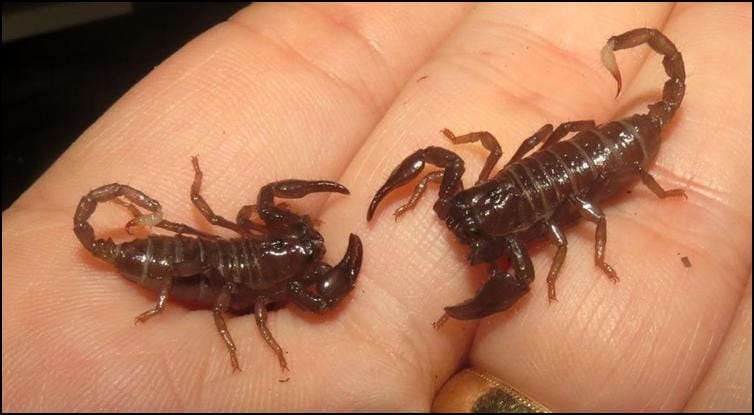
These pictures are of Emperor scorplings at around 4-5 weeks old, so they will have been independent from their mother for more than two weeks and hunting and feeding (a lot!) for themselves. They certainly look much more like real scorpions now:
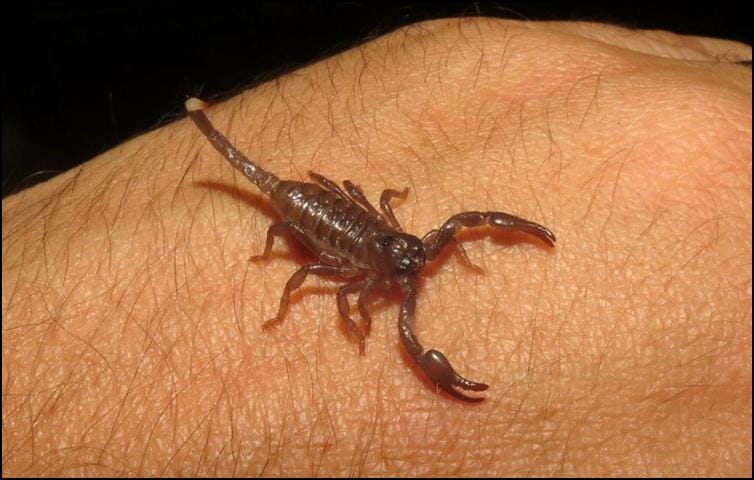
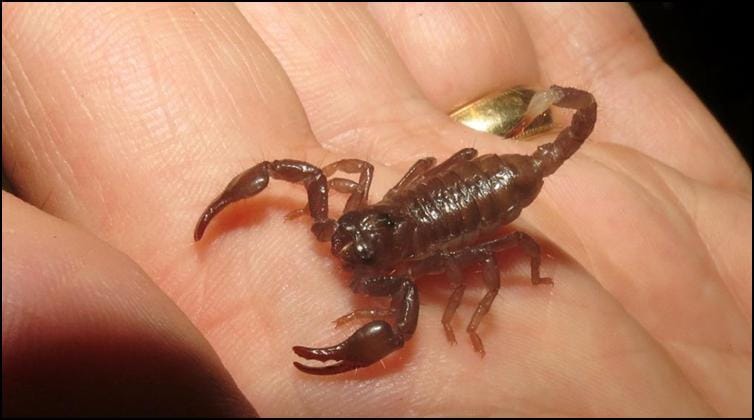
All scorpions have a venomous sting but only a very few species are actually considered dangerous to people. Most scorpion species have very weak venom and Emperor scorpions are certainly one of these. However, having been stung by one of my adults in 2007, I am very careful when and how I handle the larger ones. Whilst not causing me any significant harm, it was a huge shock and caused enough pain and discomfort to prevent me from being prepared to risk it happening again!
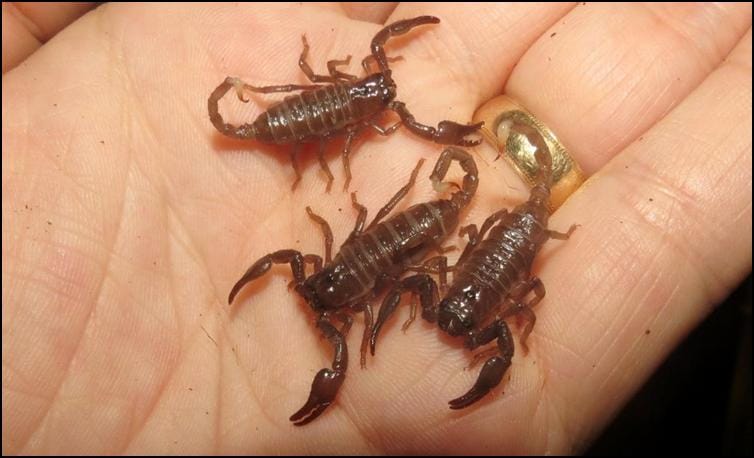
My handling of the scorplings at this size carries little risk as the sting of a scorpling is barely able to break the skin. In fact the scorplings are surprisingly calm and docile when being handled anyway and don't even making any attempt to sting as long as you handle them gently, as I always do!
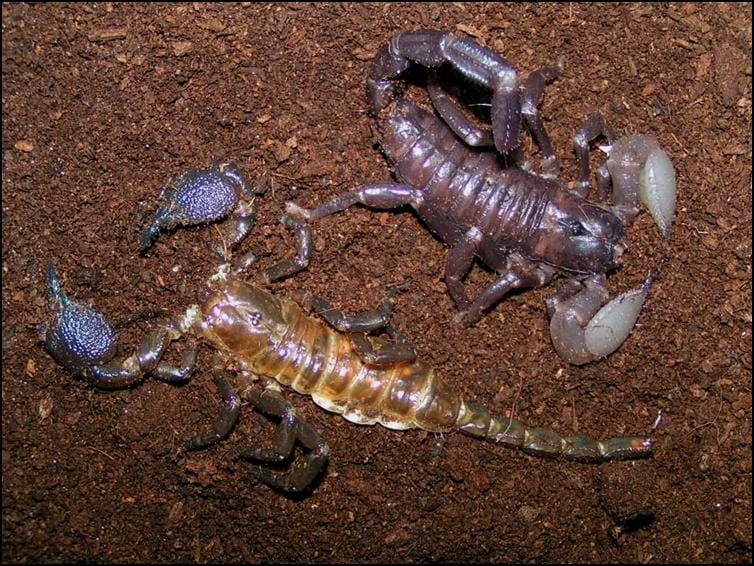
Like all arachnids, scorpions have to moult their exoskeleton regularly as they grow. Here is the scene shortly after a large juvenile Emperor scorpion has moulted. The new body or exoskeleton (top right) is very soft straight after moulting and much paler in colour than the usual jet black colouration, which will gradually come back in the days following moulting:
The pictures below are of the empty exoskeleton of an individual I used to own, who sadly broke off his stinger during an early moult - something which can never grow back. He was named Stingo! In the first picture below the head area or carapace is closed but in the second I have flipped it open to show the opening through which the scorpion's new body emerges:
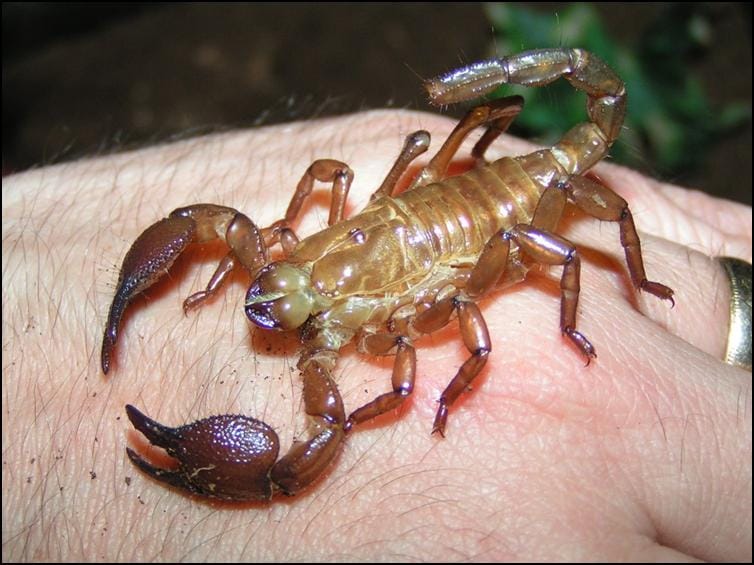
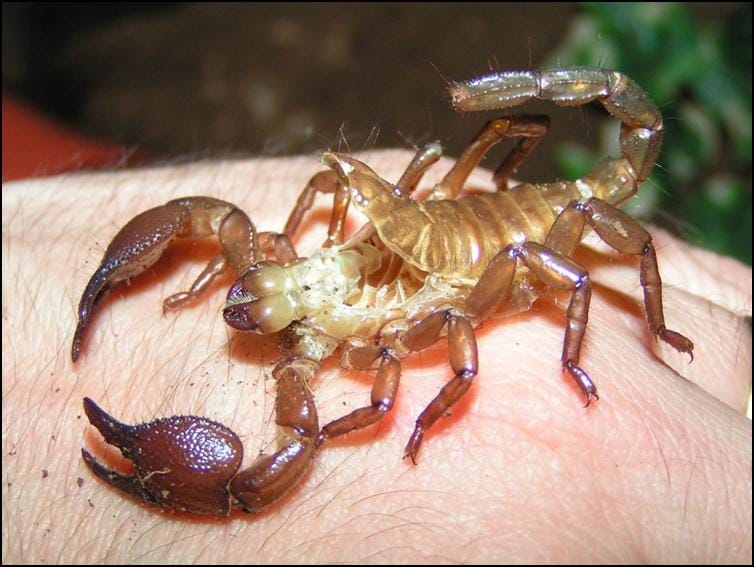
This opening can also be seen when viewing it from the front. Here the carapace is closed:
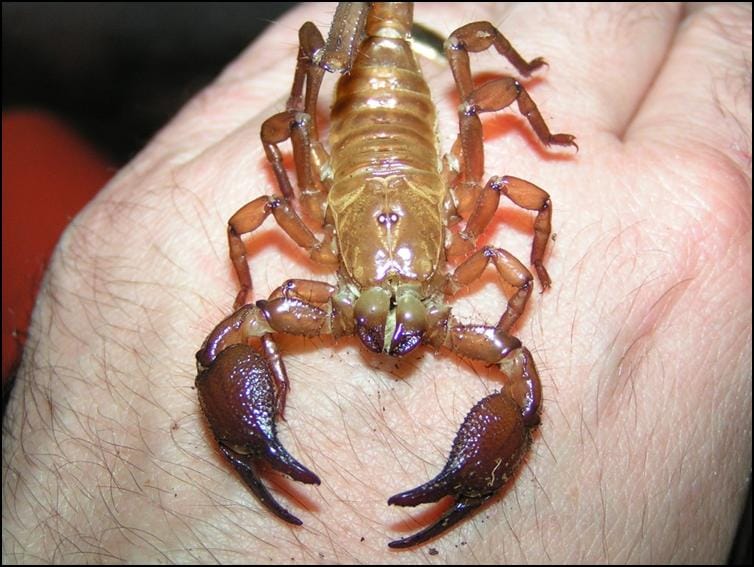
And here it is open!
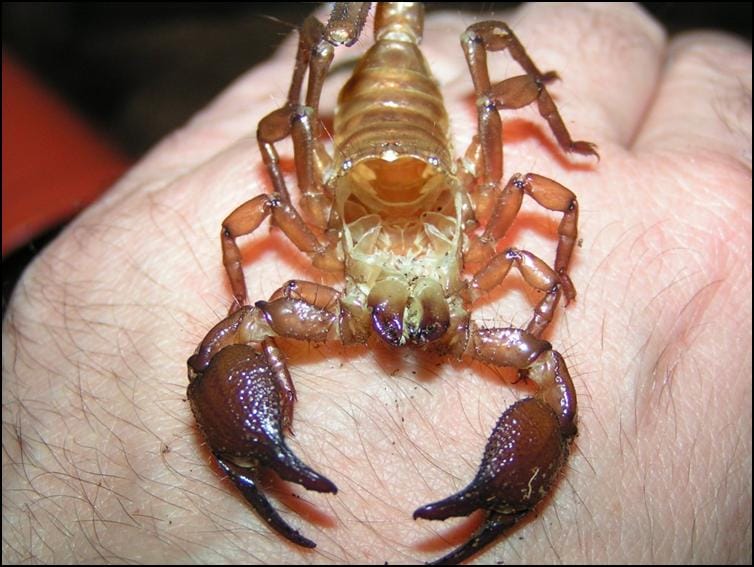
It always amazes me how an animal as complicated in structure as a scorpion can moult without damaging the old exoskeleton, but it happens pretty much every single time and this time was no exception! On all my scorpions other than Stingo the old stinger is perfectly preserved too, and you can see the sensory hairs all over the exuviae below!
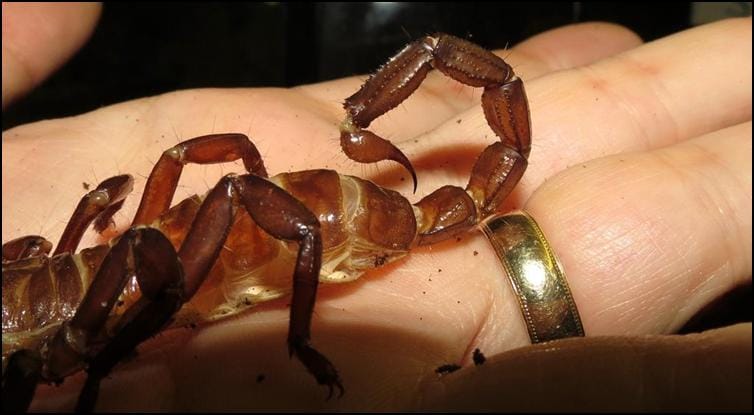
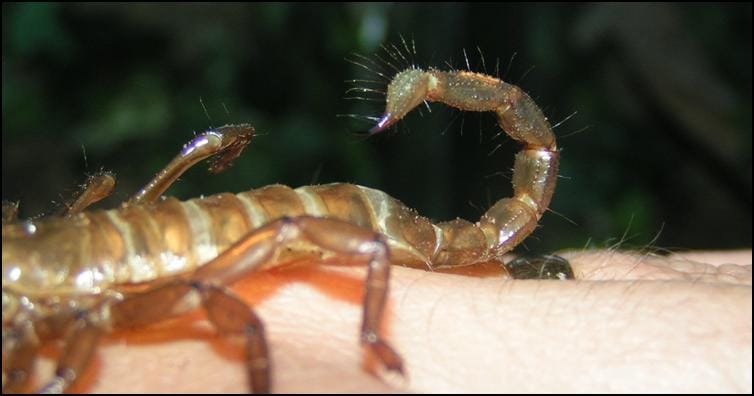
Immediately after moulting a scorpion's new exoskeleton is very soft, so they are vulnerable to attack at this time and will usually spend time in their burrow or hidden away during the time it takes for the new exoskeleton to harden up.